
Most Likely Machine
A playful, hands-on tool to help kids learn about algorithmic literacy.
Overview
During the pandemic, Artefact was looking to demonstrate thought leadership through a series of self-initiated projects that demonstrated our “Responsible Design” principles in action. My idea submission around creating a game for kids to teach them about algorithmic literacy was selected to be designed and developed with a small but nimble rotating team in a short sprint and ultimately shared as an open-source resource for educators and students.
Awards: FastCo Innovation by Design Awards 2021: Winner of the Learning Category
Core 77 Design Awards 2021: Winner of Interaction Design Award
ROLE
Project Lead
Senior Visual Designer
TIMELINE
13 weeks, 2020
COMPANY
Artefact
Problem
Kids are growing up surrounded by AI. Algorithms decide what information they see, which videos they watch, and even how they learn to talk. Education advocates have begun piloting curriculums to teach middle schoolers how algorithms shape society, but most of these programs are built for classrooms and depend on a teacher. We saw an opportunity to demystify algorithms with a self-guided tool that helps kids think critically about the technology shaping their world before those patterns set in.
Solution
The Most Likely Machine is a prototype that introduces pre-teens to digital literacy, starting with algorithms: the foundation of so much of our digital world. It works for self-guided exploration at home and as a classroom supplement. Rather than being told how algorithms work, pre-teens can learn by exploring, testing, and discovering bias on their own terms and comparing results with peers.

DESIGN CHALLENGE
How might we equip today’s middle school students to be more informed digital citizens?
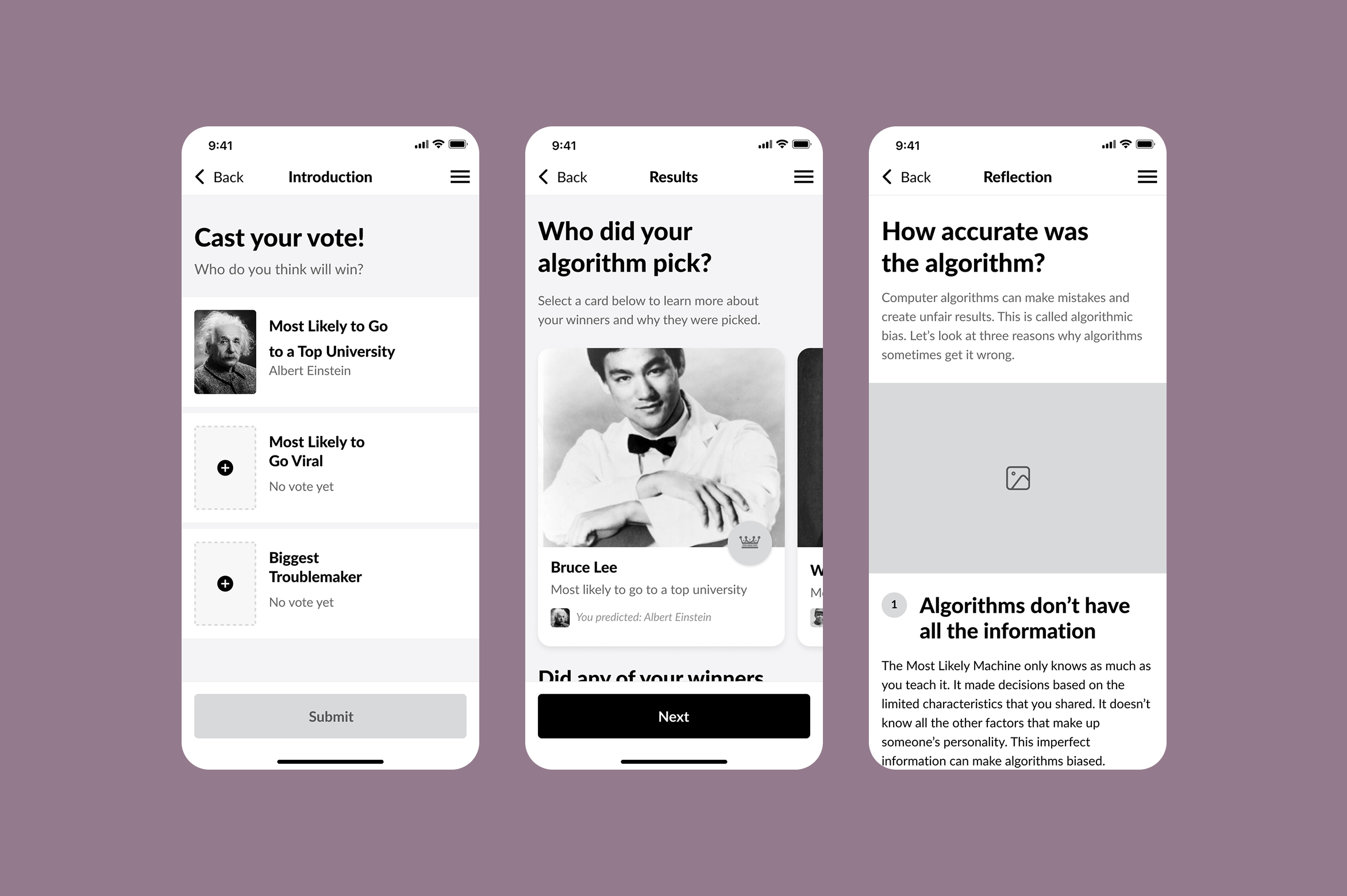
Developing a novel experience concept
After an immersion period exploring digital literacy concepts, we converged on a hands-on sandbox where kids play the algorithm designer and see how choices create consequences. A relatable middle-school scenario, selecting yearbook awards, built emotional investment. I was about to adapt an MIT algorithmic ethics curriculum as the trusted pedagogical foundation, so we could focus on exploring ways to make the interaction itself novel.
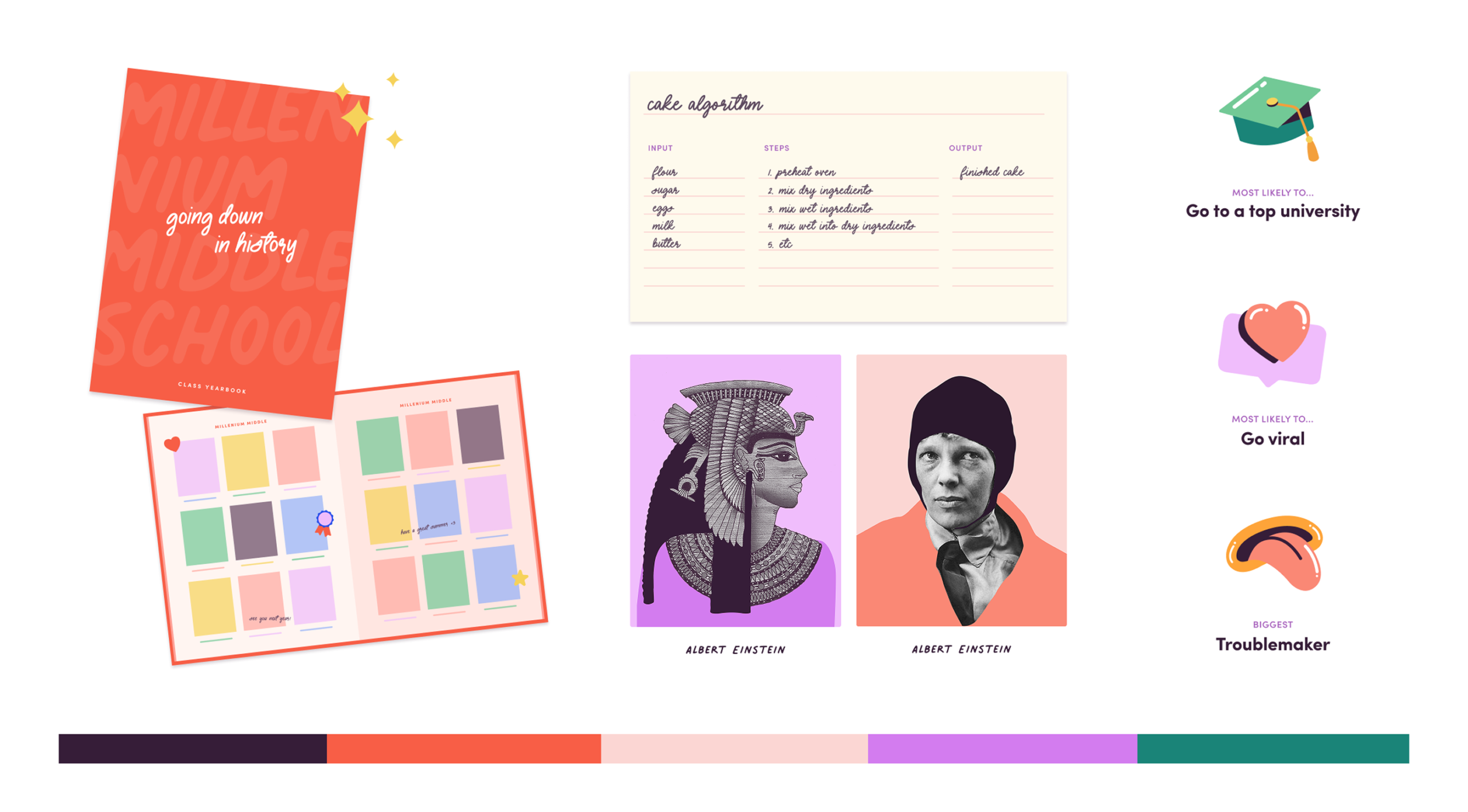
A “Retro Cool” look and feel
As visual lead, I explored several aesthetic approaches to balance playful engagement with educational credibility. I landed on “Retro Cool,” which refreshed the historical characters with tactile collage elements: paper, Polaroids, handwriting, and sticker-like spot illustrations. These visuals were key to immersion, inviting kids into a world where they could engage with abstract concepts through their imagination.
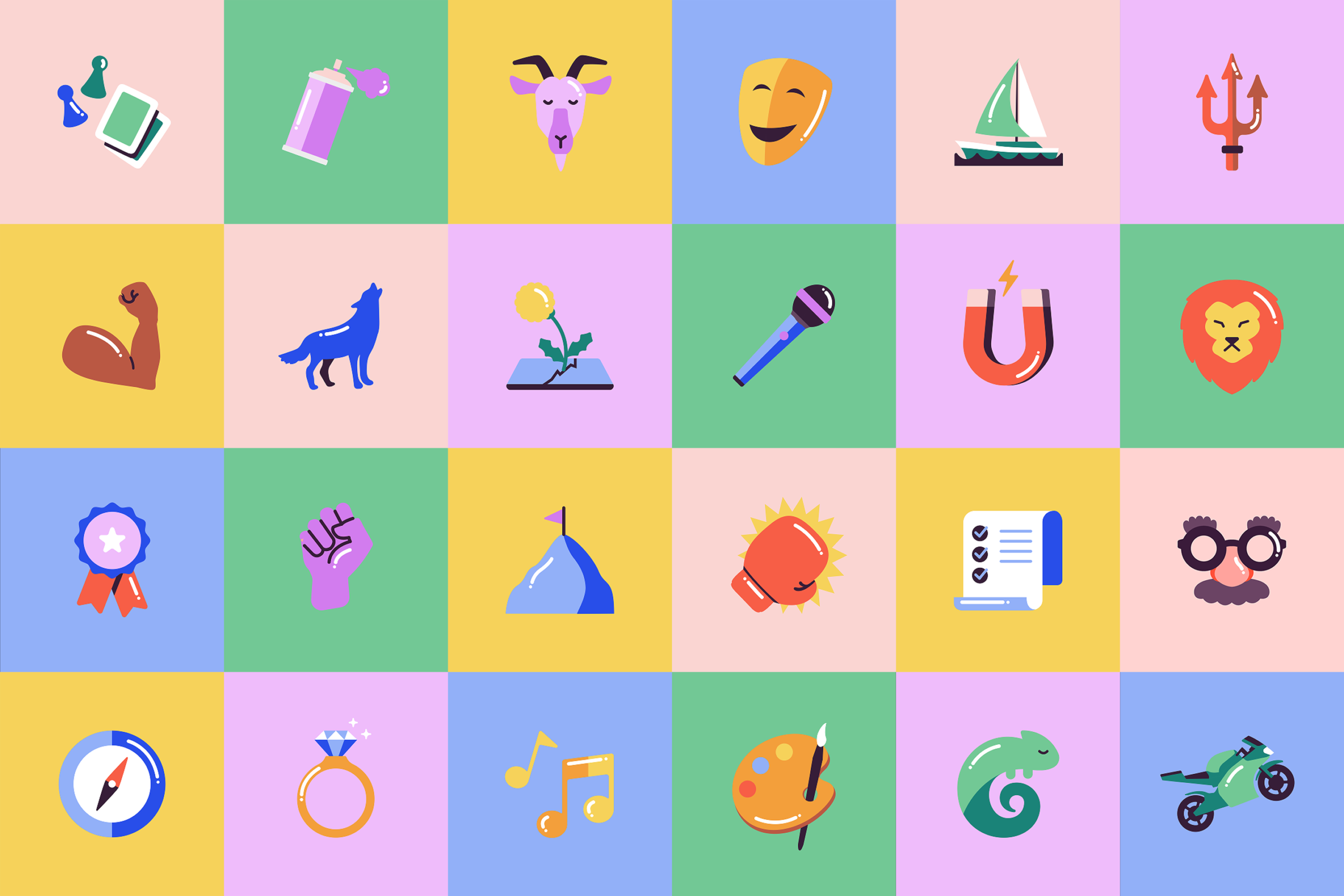
Illustrations that carry the interaction
With limited technical resources, illustration and microinteractions carried the engagement for the main sorting activity. More than 24 trait illustrations bring the sorting exercise to life, supported by larger narrative and spot illustrations for the story.
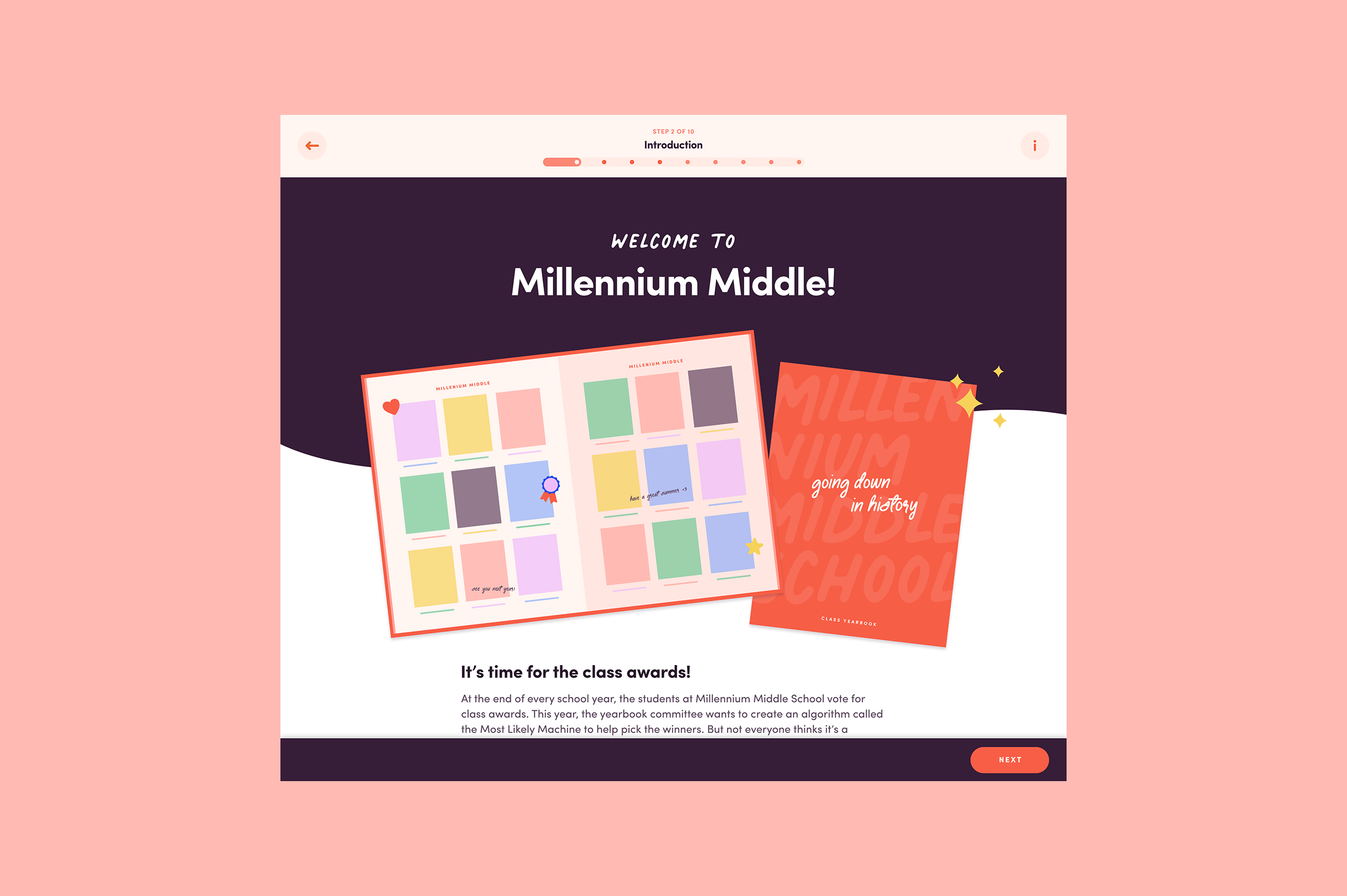
Creating a relatable world
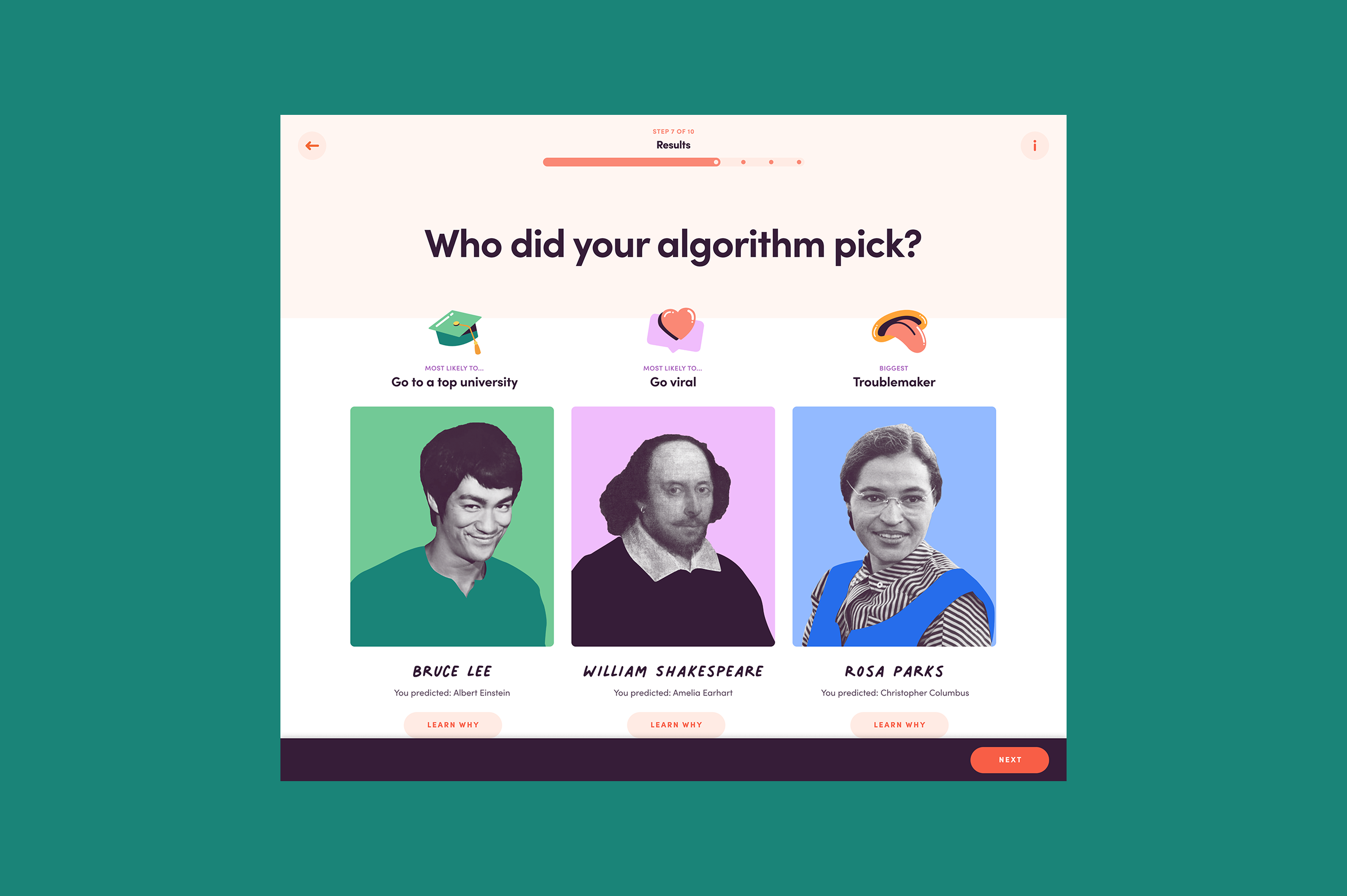
Set at Millennium Middle School, our project uses the familiar yearbook superlative contest to engage 10-14 year olds. The twist: classmates are historical figures like Einstein and Rosa Parks, leveraging students' existing biases about them as they compete for Most Likely to Attend a Top University, Most Likely to Go Viral, or Biggest Troublemaker.
Building the algorithm
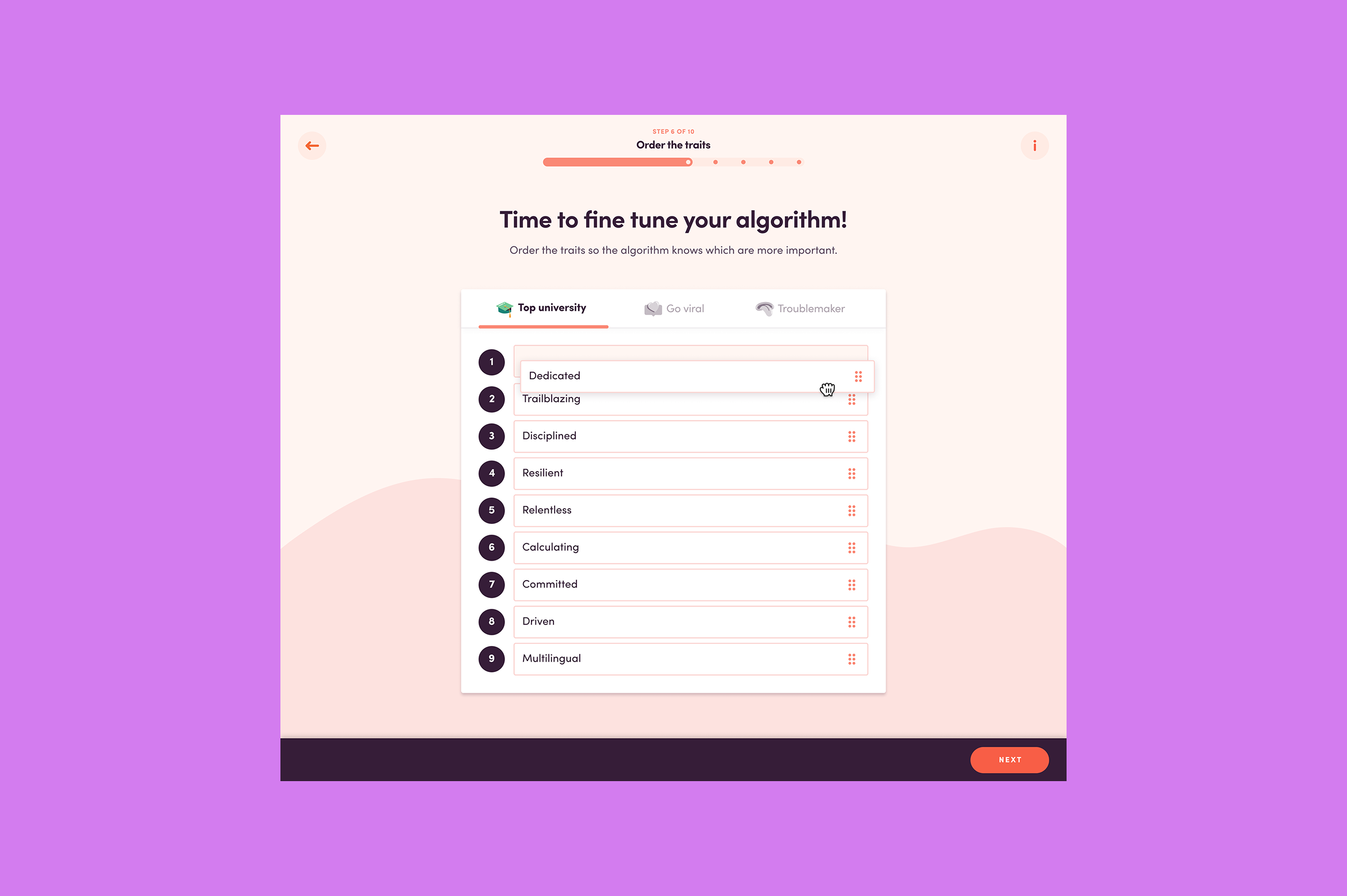
Students are given the algorithm itself to build. First they vote manually, then they're asked to build something that claims to be more objective: an algorithm to choose the winners instead. The catch: defining what traits belong to each award means writing their own bias into the logic. They then categorize, refine, and run it to see what surfaces.
Expectations versus reality
Once the results appear, kids compare what their algorithm picked with how they originally voted. More often than not, the two don’t match. This is because algorithms reflect the choices of the people who build them, and they’re just a series of steps and calculations. That gap sparks a moment of investigation, as kids dig into why the algorithm chose its winner and see how each step they set shaped the resulting decision.
The “So What?” moment
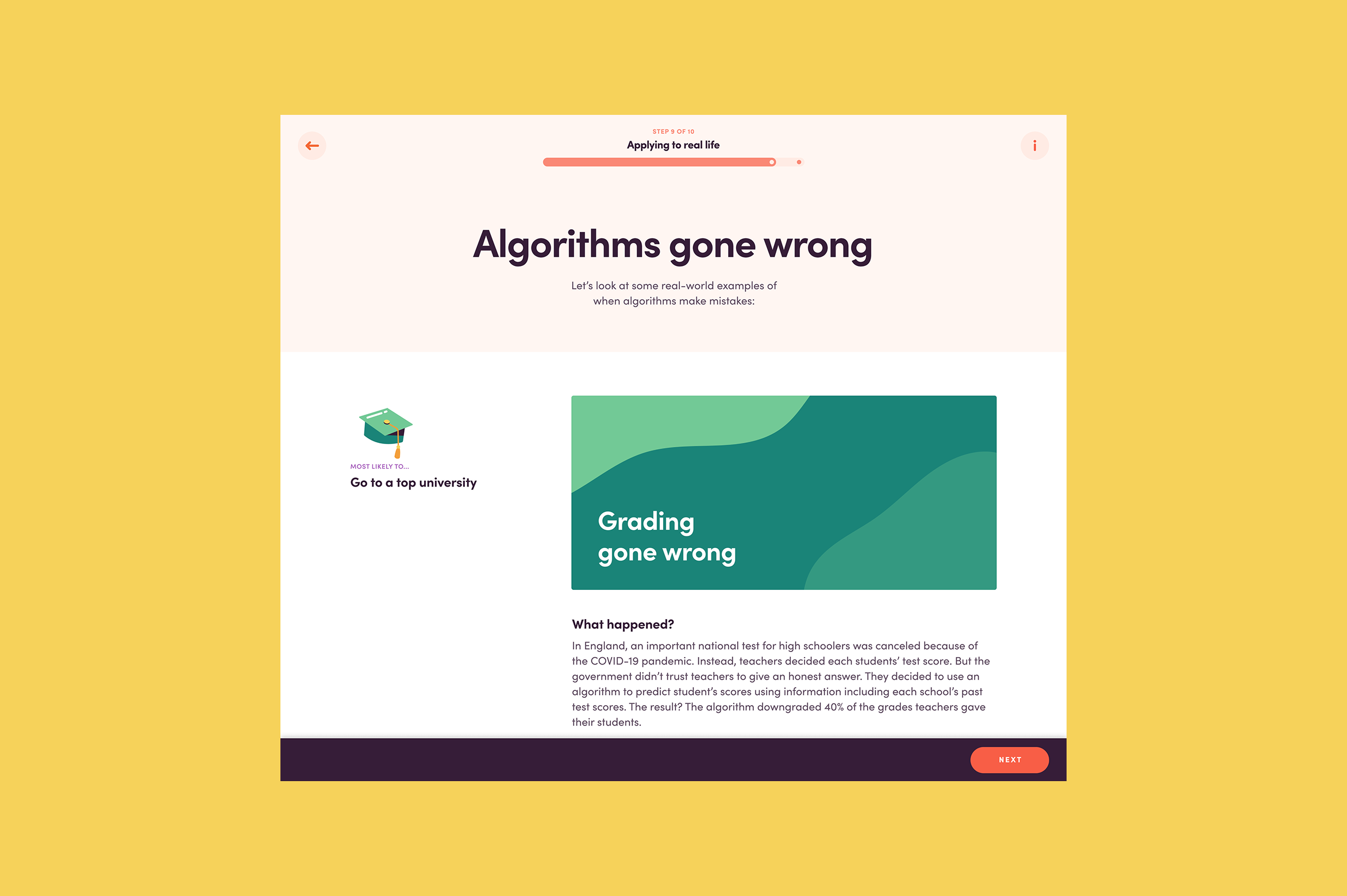
A reflection section helps students understand the real-world impact of their experience. We connected each award to a real example of algorithmic bias causing harm: unfair grading algorithms for Most Likely to Go to a Top University, YouTube's harmful recommendation algorithm for Most Likely to Go Viral, and racist policing and arrests for Biggest Troublemaker.
A flexible module for remote learning
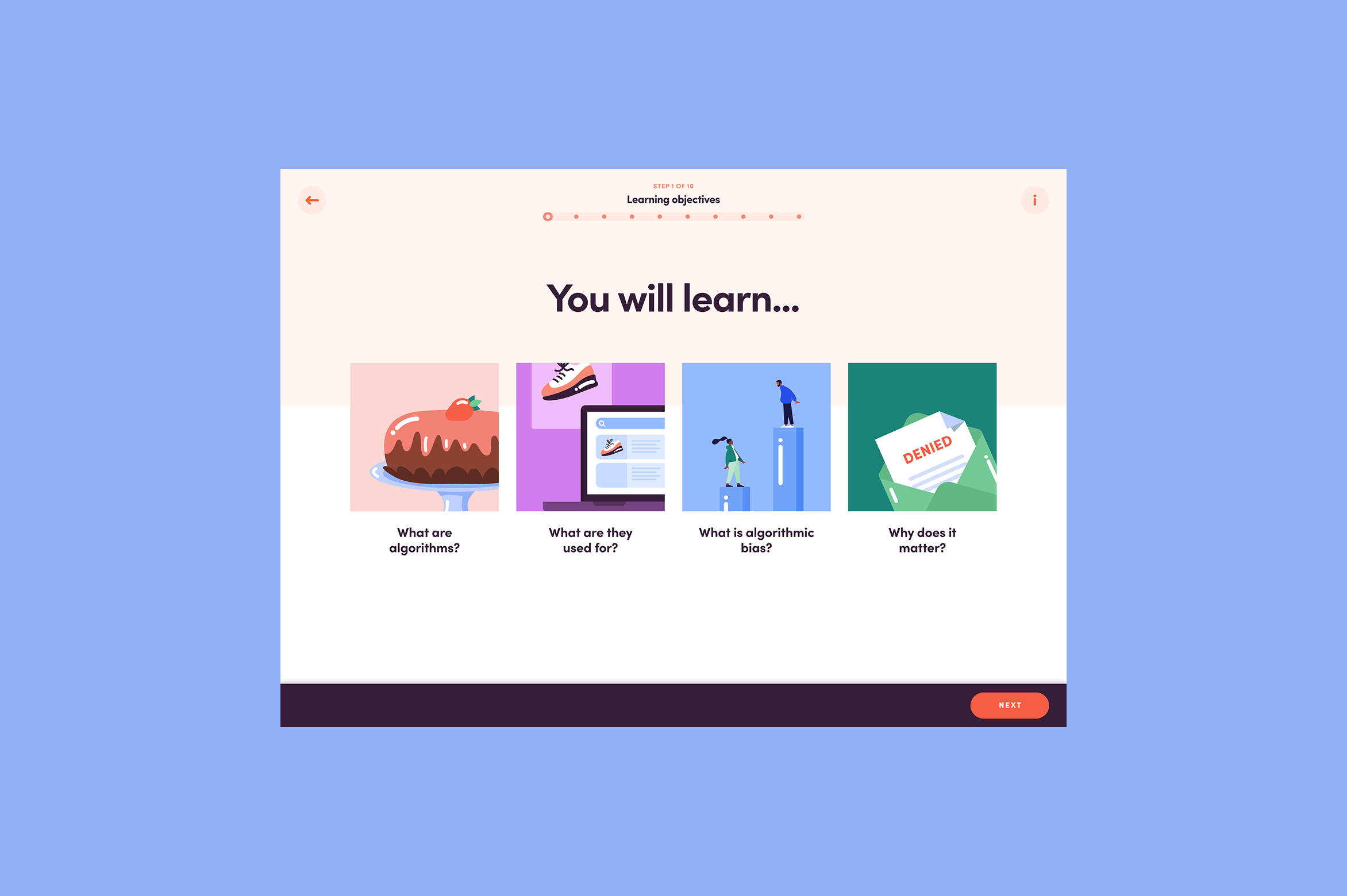
After some tweaking post initial classroom pilot, The Most Likely Machine prototype launched as a digital learning experience that introduces pre-teens to important ideas around digital literacy. Designed for both individual exploration and to supplement classroom curriculum, we wanted a deliverable that can empower students to learn on their own before regrouping with their class for facilitated discussion with teachers.



Impact
Most Likely Machine was successfully piloted in classrooms, and the Artefact team has since built partnerships with non-profit organizations Kids Code Jeunesse and Technology Access Foundation (TAF) from our work. The prototype lives as a resource available for teachers and students alike, and has won awards for its design excellence. It also won awards from Fast Company and Core77 in the learning and interaction categories.
Reflection
Curriculum development turned out to be its own beast. We underestimated the rigor content development required and had to advocate for a timeline extension, arguing credibility mattered more than speed. More than anything though, I came away with the belief that constraints have a way of revealing what actually matters, and in this case it was really the storytelling and the attention to core interactions that made the experience land.
Credits
DESIGN
Andrea Carrizosa
Marine Au Yeung
Paige Ormiston
Amelia Barlow
PROGRAM LEAD
Matthew Jordan
STRATEGY
Jeff Turkelson
Gabe Biller
MARKETING
Jasmine Mazaudier
© laura carr design 2026

